


As a lover of art, there are rare moments when a single exhibition does more than show paintings, it shakes the conscience, stirs dormant emotions, and makes us believe, once again, in the power of humanity. Standing in the halls of the historic Hôtel de l’Industrie in Paris this September, watching the crowds gather for Professor Lin Xiang Xiong’s exhibition The Vicissitudes of Life, I felt that rare magic.
The setting itself was poetic.
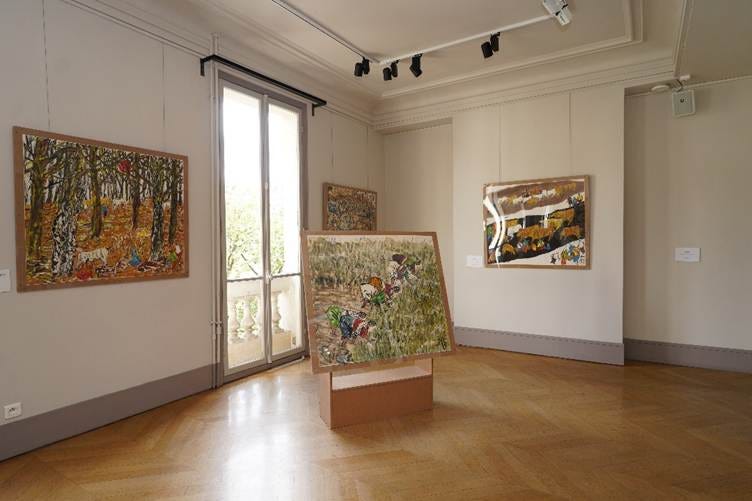
Beneath the gilded ceilings of a hall that has witnessed centuries of intellectual debate, Professor Lin unveiled 25 works that seemed less like paintings and more like living testaments. Each brushstroke felt like a whisper of history and a plea for tomorrow, his themes of anti-war, anti-poverty, and anti-pollution were not slogans, but raw truths painted onto canvas.
One could sense the silence of suffering, the cries of the earth, and the fragile dignity of humankind, all merging in a visual symphony.
What made the exhibition extraordinary was not only the art but also the dialogue it inspired. A high-level symposium brought together philosophers, scholars, writers, and cultural leaders, each exchanging views on art, culture, and peace.
Listening to François Jullien’s philosophical musings, Marek Halter’s human rights reflections, and Barbara Polla’s curatorial insight, I realised that this was not just an art event, it was a meeting of minds at the crossroads of conscience. And at the heart of it all stood Professor Lin, not simply as an artist, but as a guide reminding us that peace is both fragile and possible.
Then came the moment that still lingers in my memory: the inaugural Lin Xiang Xiong Art for Peace Prize. Nearly 1,900 entries from 100 countries, an overwhelming chorus of creative voices answering Professor Lin’s call for peace. The atmosphere was electric, as if Paris itself was holding its breath in anticipation of a new tradition being born.
Professor Lin’s words that evening stay with me still: “Every brushstroke is a testimony of time, a silent dialogue between past and present, pain and healing.” It felt less like a speech, more like a gentle reminder to all of us that art is not decoration, it is responsibility.
And the people knew it.
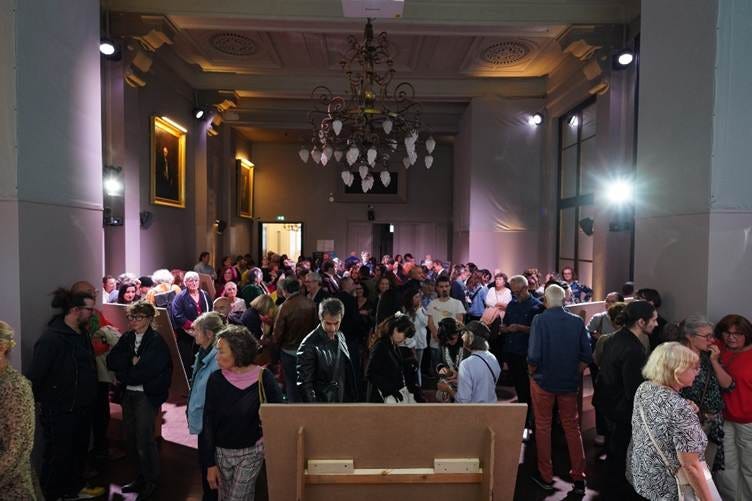
The exhibition was full, the symposium brimming with energy. In a city so often spoiled with culture, it is rare to see a hall so completely captured by one man’s vision. Yet this was not merely Paris applauding a foreign artist—it was Paris recognising that art, when honest and fearless, belongs to the world.
For me, as a long-time fan, the exhibition was also a prologue. Professor Lin announced the upcoming opening of his Penang gallery this December, 8,000 square metres dedicated not only to his life’s works but also to nurturing new voices.
To think that Southeast Asia will soon host one of the region’s largest private art galleries feels like the continuation of this Parisian dialogue, stretching across oceans, building bridges of understanding.
As I left the Hôtel de l’Industrie that night, I realised that what I had witnessed was not just The Vicissitudes of Life. It was our vicissitudes, our wars, our poverty, our polluted skies, and our shared yearning for peace. Professor Lin has given us more than art. He has given us conscience on canvas.
And for that, as a humble admirer, I can only say: merci.
Source : Online

